Chapter 6: The Minimum Viable Stack — Code vs. No-Code for Maximum Speed
One of the most paralyzing traps for aspiring app creators is technical over-engineering. Engineers spend weeks debating Rust vs. Go, React Native vs. Flutter, or Kubernetes vs. Serverless.
Meanwhile, non-technical founders wonder whether they can build a six-figure business entirely on visual no-code platforms.
The unfiltered reality of consumer software: Your users do not know and do not care what programming language or framework powers your application. They care about 60FPS scrolling smoothness, zero crash rates, and instant in-app purchase restoration.
🔴 The Over-Engineered Architecture Trap
Weeks spent configuring Docker, Kubernetes, microservices, and CI/CD pipelines ➔ 0 Paying Users & Complete Founder Burnout.
🟢 The Solopreneur Velocity Stack
Cross-Platform Codebase + Local-First Persistence + In-App Purchase SDK ➔ 100K+ Organic Downloads & Rapid Monetization.
The Code vs. No-Code Decision Matrix
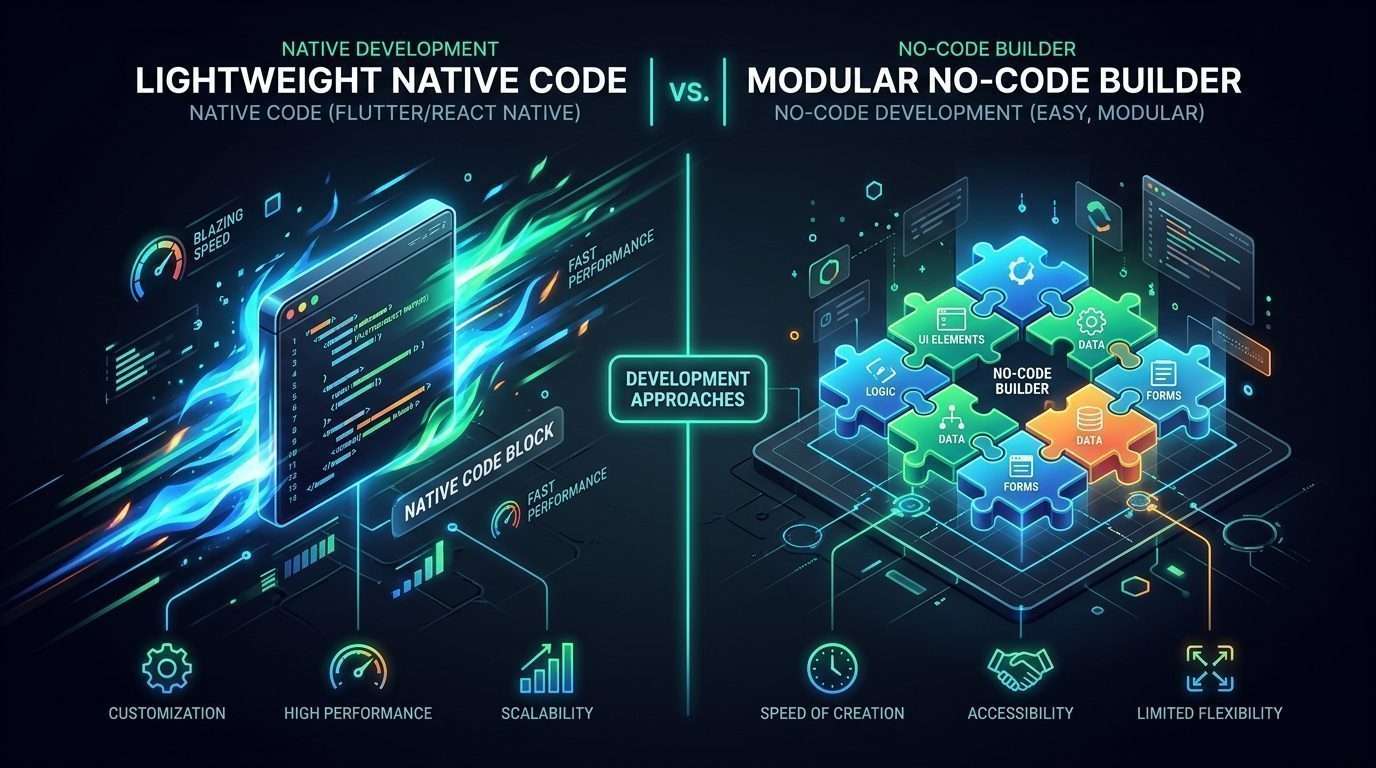
- ⏱️ Time to First Prototype: No-Code: 2 to 4 Days ➔ Cross-Platform Code: 5 to 7 Days (with AI pairing)
- 📱 Native Hardware Access: No-Code: Limited ➔ Cross-Platform Code: Full native access (HealthKit, Metal shaders, Lock-Screen Widgets)
- 🛡️ App Store Review Safety: No-Code: Moderate (Risk of Guideline 4.2 review flags) ➔ Cross-Platform Code: High (Native compiled binary, fully compliant)
- 💎 Exit Valuation Multiple: No-Code: 2.5x – 3.5x SDE (Platform lock-in discount) ➔ Cross-Platform Code: 4.0x – 6.0x SDE (Documented code commands premium cash)
When to Choose No-Code:
If you have zero coding experience and want to test your first 2 or 3 consumer concepts without hiring a developer, visual platforms like FlutterFlow provide an accessible starting point for basic CRUD and visual workflows.
When to Choose Cross-Platform Code:
If you want deep control over frame rates, custom camera capture, haptic vibration engines, lock-screen widgets, and long-term asset value, building with Flutter (Dart) or React Native (TypeScript) paired with an AI coding assistant is the definitive gold standard.
The Battle-Tested Solopreneur Stack
To operate at maximum velocity with zero maintenance overhead, standardize on this battle-tested architecture:
1. Mobile Client Layer
- Framework: Flutter (Dart) or React Native (Expo / TypeScript)
- Local State & Storage: Riverpod, Zustand, Hive, or SQLite for instant 60FPS UI response.
2. Backend & Serverless Edge Compute
- Database & Auth: Supabase (PostgreSQL + Realtime Sync + Instant Auth)
- API Routing: Cloudflare Workers or Vercel Edge Functions (Sub-50ms global latency).
3. Monetization & Paywall Infrastructure
- Subscription Engine: RevenueCat (StoreKit 2 & Google Play Billing automation).
- Dynamic Paywalls: Superwall (Remote A/B testing with zero App Store rebuilds).
4. Telemetry & Analytics
- Funnel Diagnostics: PostHog or Mixpanel (Tracking onboarding drop-off and conversion).
- Crash Telemetry: Sentry (Real-time stack traces and error alerts).
The 3 Golden Rules of Solo Infrastructure
- Never Write Your Own Subscription Backend: StoreKit 2 and Google Play Billing APIs involve hundreds of complex edge cases: grace periods, billing retries, family sharing, price-increase consent, and receipt validation. Using specialized infrastructure like RevenueCat or Superwall eliminates thousands of lines of fragile backend code.
- Local-First by Default: Store all user settings, historical logs, and AI outputs locally in on-device storage first. Sync to the cloud asynchronously in the background. An app that works seamlessly in Airplane Mode will always earn higher App Store ratings.
- Limit Dependencies to Under 15 Core Packages: Every third-party library you introduce is a potential point of failure during annual iOS/Android SDK updates. Keep your dependency tree lean and modular.
Implementation Blueprint: Lean Entitlement Check (Flutter & Dart)
A production-grade in-app purchase verification with RevenueCat requires under 25 lines of Dart code:
// lib/services/purchase_service.dart — Lean RevenueCat Entitlement Check
            import 'dart:io';
            import 'package:purchases_flutter/purchases_flutter.dart';

            class PurchaseService {
              static Future<void> initialize() async {
                await Purchases.setLogLevel(LogLevel.warn);
                final apiKey = Platform.isIOS ? 'appl_ios_production_key' : 'goog_play_production_key';
                await Purchases.configure(PurchasesConfiguration(apiKey));
              }

              static Future<bool> isProSubscriber() async {
                try {
                  final customerInfo = await Purchases.getCustomerInfo();
                  return customerInfo.entitlements.all['pro']?.isActive ?? false;
                } catch (_) {
                  return false;
                }
              }
            }
Stack Rule: Choose the stack that allows you to ship an update from feature idea to App Store review submission in under 4 hours. Velocity is your ultimate competitive weapon.
For Better Reading Experience Buy Kindle Book
Viral App Playbook
Sanjeev Kumar
Founder & Lead Engineer at PrepNew. Building cross-platform Flutter applications, serverless AI backends, and full-stack Dart web architectures.